Your homeschool learning journey — organised
Create and log activities, capture journal notes and work samples, track progress, and generate your annual report in minutes.
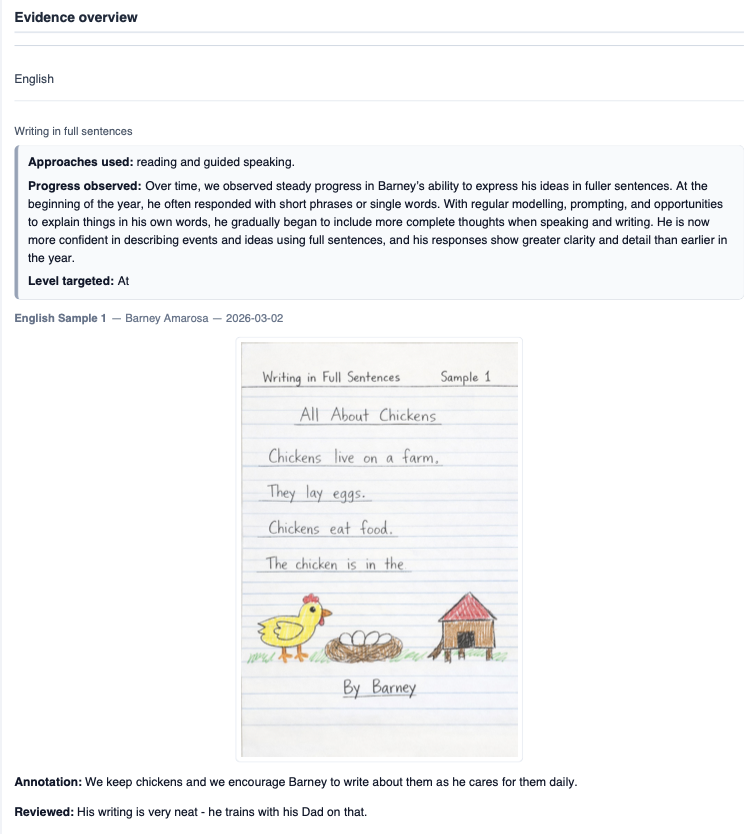
How it works
See what's inside
Real screenshots from HeadstartU — evidence, progress, and the generated report output.
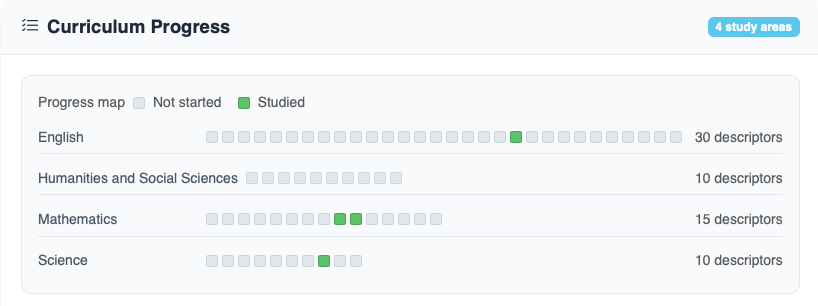
Curriculum coverage
See what's covered and what's next.
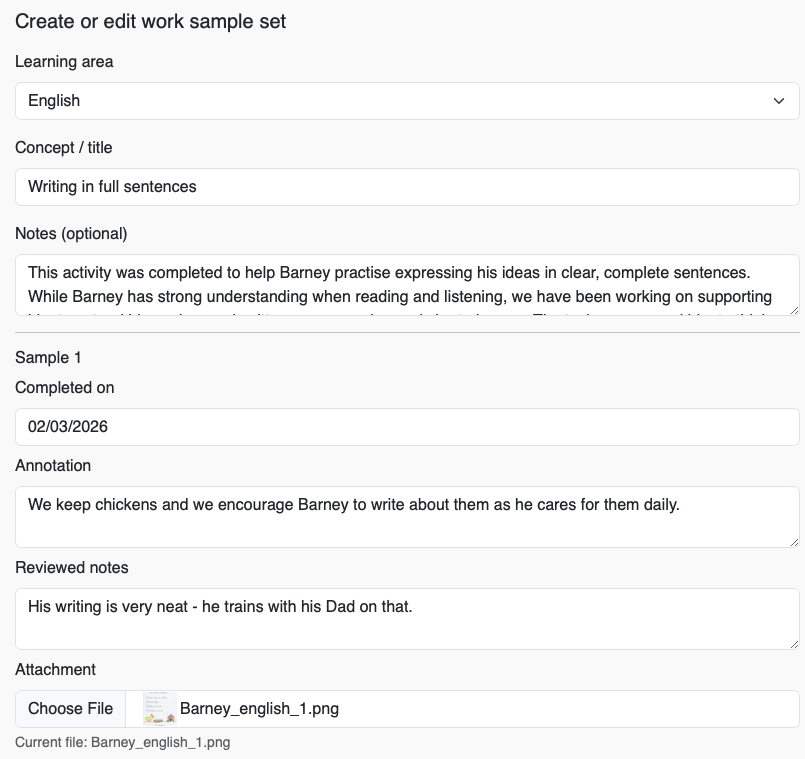
Capture evidence
Upload work samples and record progress.
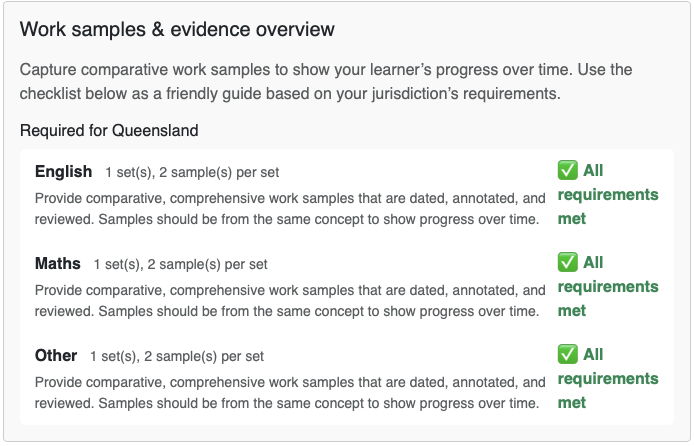
Report checks before export
Evidence requirements automatically checked.
Screenshots may be slightly redacted for privacy.
Evidence & work samples
Upload photos or PDFs, keep samples organised, and capture progress between samples.
Annual report, ready to export
Generate a structured report with the right sections — review and finalise when you’re ready.
Journal as you go
Quick notes and weekly reflections build a clear year summary when reporting time comes.
Curriculum-aligned (optional)
Link learning to Australian Curriculum v9 descriptors so you can see what’s covered and what’s next.
Practical activities (AI-assisted)
Generate real-world activities fast, then edit them to fit your learner, your schedule, and your home.
Flexible for multiple students
Assign activities to one child or a group — useful when levels overlap.
Peek inside an example activity
Supermarket Budgeting Adventure
Description: An activity where children plan a grocery shop within a budget, applying maths and reasoning skills.
Level: Year 5
Learning objectives:
- Understand the concept of budgeting and financial constraints.
- Develop estimation and rounding skills to manage money effectively.
- Formulate practical problems and apply mathematical modelling to find solutions.
Aligned curriculum descriptors:
- AC9M5N08 — Check and explain the reasonableness of solutions to problems (including financial contexts) using estimation strategies appropriate to the context.
- AC9M5N09 — Use mathematical modelling to solve practical problems involving additive and multiplicative situations (including financial contexts).
Equipment required: Supermarket catalogues, calculator, notepad, pencil, internet access (for price comparisons), and a grocery list from a parent.
Instructions for parents/educators:
- Discuss what a budget is and why it matters.
- Set a weekly supermarket budget (e.g., $50).
- Browse catalogues or online listings together; discuss price differences.
- Create a list of essential items for the week.
- Estimate costs using rounding and check totals with a calculator.
- Discuss strategies to save money (compare prices, store brands, etc.).
- Review the final list to ensure it stays within budget.
Indicators of success: The child estimates costs accurately, stays within the budget, and explains their choices using mathematical reasoning.
Rubric:
- Exceeded: Creates a comprehensive list, uses strong estimation strategies, and justifies choices clearly.
- Met: Lists items accurately, estimates costs with some support, and stays within budget.
- More learning needed: Requires significant help estimating costs or staying within budget, and struggles to justify choices.
Track each student’s curriculum progress

View completed outcomes by subject and curriculum descriptor.
Professionally reported in PDF exports.
Try it in 2 minutes
Generate a practical activity, then decide if you want the full hub for journaling, evidence, and reporting.